.png)
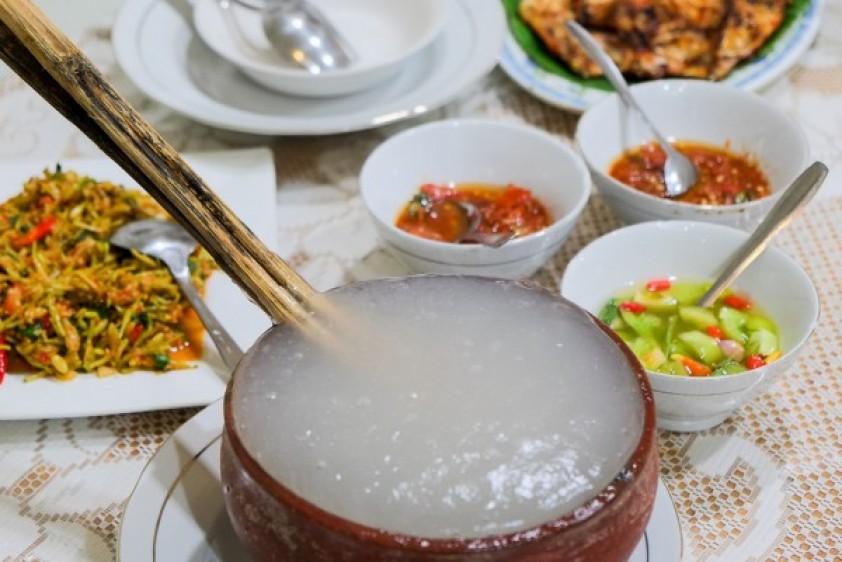
Healthy living begins with complete nutrition consumed every day. To get a healthy life, of course the nutritional intake obtained from food must be balanced, right? One of the staple foods known to contain protein, minerals, and vitamins is sago.
Eastern society has made sago a staple food substitute for rice. In fact, since 2013, Papua has become one of the largest sago-producing commodities in Indonesia with an area of 1.20 million hectares covering West Papua, followed by Maluku, Sulawesi, Sumatra, Kalimantan, Riau Islands and Mentawai Islands. With so much potential for sago in Indonesia, sago can be a superior product to replace rice while improving the welfare of the Indonesian people.
In 100 grams of dry sago, there are 355 calories containing various nutrients, ranging from 94 grams of carbohydrates, 0.2 grams of protein, 0.5 grams of fiber, 1.2 mg of iron and 10 mg of calcium.
Not only as a substitute for rice, sago can also be used as an ingredient for making glucose, used as an animal feed ingredient and as a raw material for making textiles. Apart from being useful for other industrial sectors, there are reasons why sago can be a staple food substitute for rice:
- Sago has carbohydrates that are prebiotic, with a low glycemic index value of <55 and contains 3.69%-5.96% high dietary fiber.
- Sago can help reduce cholesterol levels in the blood, reduce the risk of heart disease and diabetes and smooth the digestive tract.
- The content of iron and calcium in sago can be useful for preventing osteoporosis because sago can increase the production of glucosamine in bones so that it affects flexibility, joint movement and bone density.
Getting a healthy life has become the desire of every Indonesian family. Sago has proven to be an alternative staple food for families. The nutritional content in the complex sago has good benefits for the body. Apart from living a healthier life, Indonesian sago farmers are also more prosperous thanks to the support of Indonesian families.